
MEDICALLY LED CARDIFF
Pigmentation treatment in Cardiff
Melasma, sun damage and post-inflammatory marks — assessed and treated with a medically-led plan built around your skin type and your triggers
Pigmentation is the concern people most often try to fix themselves, and the one where the wrong approach does the most damage. Brightening products bought on guesswork, aggressive exfoliation, or a laser used on the wrong skin type can all leave the skin darker than it started. Pigment is also stubborn — it sits at different depths, responds to different triggers, and behaves differently depending on your skin tone. Getting it right starts with working out what kind of pigmentation you actually have.

MEDICAL-GRADE SKINCARE FOR PIGMENTATION
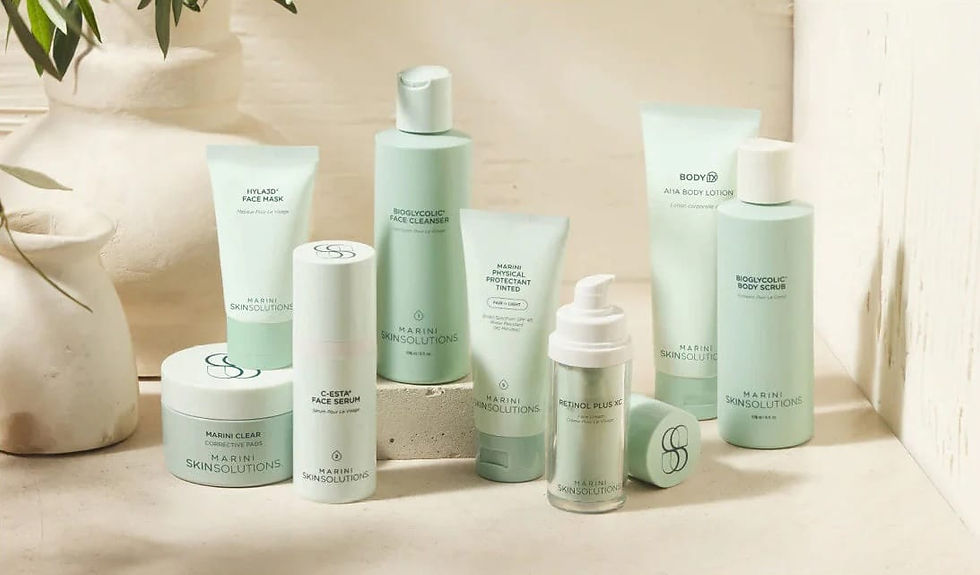
Pigmentation is the concern where daily skincare does most of the work — in-clinic treatments accelerate things, but what you apply every morning is what stops new pigment forming. We stock the pigmentation ranges from Obagi Medical, Jan Marini and Medik8: vitamin C, niacinamide, azelaic acid, tranexamic acid, alpha arbutin and retinaldehyde, alongside the daily SPF that makes all of it work.
Some of the most effective options are prescription-only and aren't sold openly online; these are arranged after a consultation so your routine is matched to your skin and used safely. The products below are available to shop now — and if you're unsure what suits your skin, take our online skin consultation and, if approved, you will gain access to prescription products.




Understanding pigmentation
What is pigmentation?
Pigmentation is what happens when melanocytes — the cells that produce melanin — become overactive and deposit more pigment than the surrounding skin. Melanin itself is protective; it's the skin's response to injury and UV. The problem is when that response becomes patchy, excessive or persistent.
Where the pigment sits matters as much as how much there is. Epidermal pigment, near the surface, responds relatively well and relatively fast. Dermal pigment, deeper down, is far more stubborn and can be permanent. Most real-world pigmentation is mixed, which is why results are gradual and why anyone promising to clear it in one session is overselling.
Why pigmentation happens
Several factors drive pigment production, and most cases are a combination:
UV exposure — the single biggest driver. Even brief daily incidental exposure keeps melanocytes stimulated and undoes treatment.
Visible light and heat — often missed. High-energy visible light and infrared heat drive melasma independently of UV, which is why some people flare in winter or near a hob.
Hormones — oestrogen and progesterone stimulate melanocytes. Pregnancy, the combined pill and HRT are common triggers, particularly for melasma.Inflammation — any insult to the skin can leave pigment behind: acne, eczema, waxing, ingrown hairs, an aggressive treatment.
Skin type — deeper skin tones have more reactive melanocytes. They pigment more readily and hold it longer, and they're at higher risk from over-aggressive treatment.
Genetics — a family history of melasma makes it considerably more likely.Medication — some drugs increase photosensitivity or drive pigmentation directly. Worth reviewing at consultation.
Identifying the trigger is most of the treatment — because pigment that keeps being provoked will keep coming back, however well you treat what's already there.
Our approach to treating pigmentation
Pigmentation responds to consistency and sun discipline far more than to intensity. At Sebastian Rose, your treatment is led by a prescribing medical practitioner and usually combines:
Daily SPF, without exception — the non-negotiable foundation. Broad-spectrum, high factor, reapplied, and ideally tinted with iron oxides for melasma, since these block visible light in a way conventional sunscreens don't.
A prescriber-led skincare routine — medical-grade actives that slow pigment production and speed clearance of what's already there, with prescription-strength options where appropriate.
In-clinic treatments — chemical peels, medical microneedling and skin boosters to accelerate clearance and improve overall tone, chosen carefully according to skin type.
Long-term maintenance — pigmentation recurs when treatment stops. Maintenance is built into the plan from the start, not added at the end.
Results with pigmentation are measured in months, not weeks — most people see meaningful change between three and six months of consistent treatment. We deliberately build slowly, because pushing too hard is the most common cause of pigmentation getting worse rather than better. What we offer is a realistic, medically sound plan with visible, lasting improvement.
Why choose a medically-led clinic
Pigmentation is the concern where the wrong treatment causes the most harm. Harsh exfoliation, unsuitable devices and over-strength actives can all trigger the exact inflammation that produces more pigment — and lasers and IPL, used on melasma or on deeper skin tones without proper assessment, can leave permanent marks that are considerably harder to treat than the original problem. Pigmentation can also occasionally mimic conditions that need medical attention rather than cosmetic treatment. At Sebastian Rose, your skin is assessed and prescribed for by NMC / GMS experts with over 20 years of clinical experience, so your plan is both effective and safe.
Pigmentation treatment FAQs
Can pigmentation be removed completely?
Some types, yes. Sun spots and post-inflammatory marks often clear substantially or completely with the right plan. Melasma is different — it's managed rather than cured, and it recurs when treatment or sun protection stops. We'll tell you honestly at consultation which category you're in.
How long does it take to see results?
Expect gradual change over three to six months. Post-inflammatory marks are usually the fastest; melasma is the slowest and needs the most patience. Anything that clears pigmentation in days has almost certainly just exfoliated the surface, and it will come back.
Will it come back?
Melasma very likely will if sun protection lapses or hormonal triggers return. Sun damage will recur with further UV exposure. This is why maintenance and daily SPF aren't optional extras — they're the treatment.
Does SPF really make that much difference?
It's the single most important thing you'll do. Without daily broad-spectrum protection, everything else is working against a tide. For melasma specifically, a tinted SPF containing iron oxides outperforms a conventional one, because it blocks the visible light that untinted sunscreens let through.
Is laser the answer?
Sometimes, and sometimes it's actively the wrong choice. Laser and IPL can worsen melasma and can cause post-inflammatory hyperpigmentation in deeper skin tones. It's a decision that follows a proper skin assessment, never a starting assumption.
Can I treat pigmentation while pregnant or breastfeeding?
Some options are suitable and others aren't — several common pigmentation actives are avoided in pregnancy. Melasma that appears in pregnancy also frequently improves on its own afterwards, so the sensible approach is usually gentle maintenance and strict sun protection until then. Tell us at consultation and we'll plan around it.
I have a deeper skin tone — is treatment safe for me?
Yes, with proper assessment. Deeper skin tones need a more cautious approach because they pigment more readily in response to inflammation, which means gentler actives introduced more slowly and careful selection of in-clinic treatments. Being treated by someone who understands that is the difference between improvement and a worse outcome.
Do I need a consultation before buying products?
For our open-shelf skincare, no — you can shop those directly. For prescription-strength options, and for any in-clinic treatment, yes: pigmentation is the concern where matching the plan to your skin type genuinely changes the outcome.